Is AI Clothes Removal Legal? Consent, Copyright and AI Image Rules
Separate photo rights, consent, upload privacy and publication rules, with primary sources and a practical permission record.
Quick answer: legality depends on the photograph, the person depicted, the transformation, the processing service and the final use. A consensual, fully clothed fashion edit can be very different from a deceptive or non-consensual intimate image. Ownership of a file or payment for an editor does not settle every permission question.
“Is AI clothes removal legal?” is too broad for a universal yes or no. Removing an outer coat for an approved fashion project, generating a hypothetical shirt and creating a sexualised image of a real person raise different issues. The applicable law can also depend on where the people and publisher are located.
This guide focuses on fully clothed apparel editing and separates the checks that are often confused: source-photo copyright, permission for a person's likeness, upload privacy, product accuracy and publication rules. The regional examples below use primary sources checked for this update. They are a starting point for review, not a determination for an individual dispute.
1. Separate the permission questions
| Question | What to establish | Useful record |
|---|---|---|
| Who controls the photograph? | Rights to edit and use the source | Licence or photographer agreement |
| What did the subject approve? | Transformation and intended publication | Specific written permission |
| Where is the file processed? | Appropriate use of the service and personal data | Provider terms and processing decision |
| What does the output imply? | Accurate product and appropriate representation | Brief and final approval |
| Where will it appear? | Relevant local law and destination rules | Publishing requirements and review notes |
A client can authorise a design project without owning every source image. A subject can agree to a portrait without agreeing to a clothing transformation. A software provider can permit commercial outputs without licensing a photographer's original work. Keep those permissions distinct.
2. Check copyright in the source photograph
The US Copyright Office's photographer guidance explains that the photographer is generally the initial owner, with exceptions such as qualifying work made for hire. Possessing a copy, appearing in the photograph or paying for a shoot does not by itself establish every usage right.
Find the applicable agreement. For a commissioned shoot, check who owns the files and which uses were licensed. For stock photography, check whether alterations, advertising, sensitive uses or AI processing are restricted. For a client-supplied image, ask the client to identify its source and relevant permission.
Be cautious with photographs found on search engines or social feeds. Public access is not the same as a licence to edit and republish. Editing the clothing does not erase the rights question in the original image.
Keep the licence, invoice or agreement with the source file. Record restrictions in ordinary language, such as internal presentation only or specified campaign dates. A practical project record reduces the chance that an otherwise acceptable edit is used outside its authorised scope.
3. Agree on the transformation with the person depicted
For a commissioned fashion workflow, get specific approval for the intended clothing change. Explain whether the image will show a colour adjustment, a hypothetical garment or a reconstructed covering base outfit. Show examples of the type of change when that helps the subject understand the brief.
Also agree on the destination. Private review, a public lookbook, paid advertising and a marketplace listing can create different expectations. A person approving one use has not necessarily approved every future use of their edited likeness.
Document important limits: no changes to facial appearance, no new endorsement, no intimate transformation, a particular campaign or a right to approve the final image. The exact legal effect of an agreement depends on jurisdiction and wording, but clear project instructions make approval more meaningful.
A generic “consent required” badge on a website is not a record of actual permission. The publisher needs a process for the specific image. If the proposed result moves outside the agreed brief, obtain the relevant approval before treating it as a deliverable.
4. Review privacy before uploading a portrait
A photograph of an identifiable person can involve personal-data rules as well as image permissions. The UK's ICO lawful-basis guidance explains the need to choose an applicable basis for processing. Consent is one route in appropriate circumstances; it is not a universal answer to every data-protection question.
For a professional workflow, identify the service receiving the image and review its current privacy terms. Check what is uploaded, where processing occurs, whether content is retained, how deletion works, who can access projects and whether training use is addressed.
Do not substitute a guess for an unclear policy. “Browser-based” does not mean local processing, and “paid” does not mean private processing. The specific feature can matter, particularly in a suite using several models or external services.
Send only the material necessary for the project. Avoid unrelated identity documents, private metadata or other people's photographs in a shared folder. For employee, client or confidential product images, follow the organisation's approved processing arrangements and seek specialist review if the situation requires it.
5. Check what the output depicts and implies
A fully clothed edit can still be misleading. Adding a brand uniform may imply employment or endorsement. A changed outfit in a news-like photograph can misrepresent an event. A generated pocket or fabric pattern can misstate what a customer will receive.
Ask what a reasonable viewer is likely to infer from the final image and its placement. A clearly framed design exploration has a different context from an advertisement claiming that a real person uses a particular product. Review the caption, surrounding text and destination together with the picture.
For product imagery, compare the final garment with the real item. Approve actual construction, colour and visible artwork. A generation's visual plausibility does not establish that the product exists or that the photograph represents it accurately.
For portraits involving young people, ordinary non-sexual photography and prohibited sexual content are different categories. Do not assume all images of minors are universally unlawful. They do require additional care around permissions, privacy and safeguarding; these tutorials use adult, fully clothed fashion scenarios.
6. United States: understand the scope of TAKE IT DOWN
The FTC's TAKE IT DOWN compliance guidance describes Section 3 obligations effective May 19, 2026. Covered platforms must provide a removal-request process and remove qualifying non-consensual intimate content and known identical copies within 48 hours of a valid request.
That platform obligation is not a blanket permission rule for ordinary fashion editing. It addresses a defined harm and defined duties. Do not infer that an image is lawful simply because it is outside that particular removal mechanism.
For a US commercial project, source-photo rights and relevant state rules concerning likeness, privacy or deceptive use can also matter. The appropriate review depends on the facts and location. If a real person's endorsement or a contested transformation is involved, obtain advice for that specific project.
When abuse is reported, preserve necessary evidence such as URLs, timestamps and platform responses without unnecessarily redistributing the image. Use the platform's reporting process and the relevant official guidance. Keep complaint handling separate from normal promotional publishing.
7. England and Wales: distinguish fashion edits from intimate-image offences
The Crown Prosecution Service's current guidance describes offences involving the creation or requested creation of purported intimate images of adults under Sections 66E and 66F of the Sexual Offences Act 2003. The creation offence includes lack of consent and lack of a reasonable belief in consent.
This is a specific legal framework, not a rule that every clothing edit is criminal or that every non-commercial edit is permitted. A fully covering sweater replacement and a non-consensual intimate deepfake involve materially different outputs.
Keep the geographical scope clear. England and Wales, Scotland and Northern Ireland can have different legal provisions and enforcement arrangements. A statement about one jurisdiction should not be casually presented as the law everywhere in the UK.
If the result becomes intimate, coercive or part of harassment, stop treating it as a routine retouching decision. Consult the current applicable law and professional advice as needed. A watermark, disclaimer or payment to a software provider cannot substitute for the relevant permission.
8. European Union: review transparency rules in context
The European Commission's Article 50 overview states that the AI Act's relevant transparency obligations apply from August 2, 2026. Provider marking duties and deployer disclosure duties are distinct.
The Commission's Article 50 FAQ explains that deepfake assessment includes resemblance and a false appearance of authenticity, with context and audience expectations relevant. It also explains that embedded machine-readable marking alone does not satisfy a deployer's applicable disclosure duty.
Do not translate that framework into a claim that every ordinary adjustment worldwide needs the same visible label. Consider the particular content, role, audience and applicable exceptions or qualifications. Review current official guidance for an EU-facing project rather than relying on an old generic checklist.
Transparency also does not clear copyright, subject permission or privacy questions. When disclosure is required, address it alongside those other checks. A statement that content is edited does not automatically make its use fair, accurate or authorised.
9. Check the publishing platform separately
A platform can impose rules in addition to the law, including image specifications, content restrictions and requirements for generated material. Review the rules for the actual placement rather than assuming one marketplace policy applies to every web page.
For Google Shopping, Google's AI-generated content guidance addresses generated-image metadata and preservation of relevant source-type tags. That is a destination-specific requirement, not evidence that this website or any editing tool automatically provides the necessary metadata.
Inspect the actual delivery file and its publication context. A screenshot can lose metadata; a publishing system can recompress an upload; an image used outside the approved placement can create a new review question. Keep the original export and record the version that was published.
10. Keep a practical permission and approval record
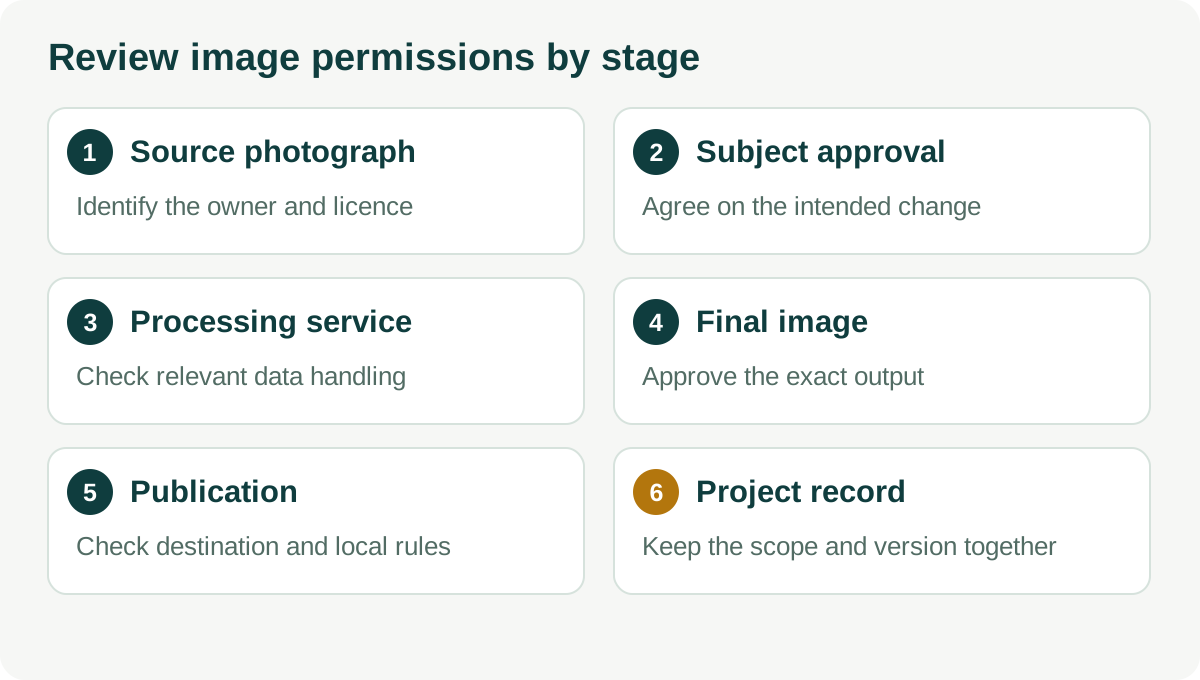
Create a short project record containing the source filename and owner, relevant licence, adult subject's approval, intended transformation, processing service, destination, usage period and final approved version. Add any limits that affect future reuse.
A useful request describes the action plainly: “We intend to change only the shirt colour in this portrait, process the image with the named editor and use the approved result in this campaign.” Adapt the document to the project and seek legal help when formal contract language is needed.
Separate approval of the editing concept from approval of the final file. Show the output to the appropriate reviewer and record what it is cleared for. A concept approved for internal discussion should remain distinct from a public advertising deliverable.
Keep access limited to people working on the project, and follow the agreed retention process. If permission is disputed or the intended use changes, review the record before publishing another version. Good documentation helps identify the actual issue instead of relying on a blanket claim of legality.
Review a change of use before reusing an approved file
Suppose a model approved a shirt recolour for an internal design presentation. Months later, a team wants the same picture in a paid advertisement. Check the original licence and subject approval for that new destination, campaign and period. Also check whether the depicted colourway is a real product. The fact that the file was previously approved does not settle the new publication decision.
Record any additional approval with the exact version being reused. If a reviewer requests a change, preserve the earlier approved file and make a new revision rather than silently replacing the record. This gives the team a clear history of what was permitted, what changed and which image was ultimately published. It also makes responding to a later question about the project more straightforward.
Frequently asked questions
Does owning the photograph settle the subject's permission?
No. Copyright in the photograph and permission concerning a person's likeness or transformation are separate questions. The intended use and relevant local law matter.
Does a paid editor guarantee commercial rights?
Check the exact provider terms. Those terms do not replace source-photo permissions, subject approval or product accuracy review. A subscription is not a universal legal clearance.
Is a fully clothed edit always lawful?
No automatic guarantee follows from clothing coverage. Copyright, privacy, endorsement, misleading presentation and other context-specific issues can still arise. Use the permission checks above for the actual project.
Is this a substitute for legal advice?
No. These are general workflow questions and selected regional references. For a disputed likeness, sensitive transformation or substantial advertising campaign, obtain advice from a qualified professional in the relevant jurisdiction.